


YourJob project is a hope for a better future for young people in BiH
uto, 20. travnja 2021. 15:04 Bosna i Hercegovina
YourJob project in Bosnia and Herzegovina offers unemployed young people up to 30 years of age various activities to prepare for the labor market: counseling, training for soft skills, retraining, mediation in finding the first work experience, mentoring internships, monitoring self-employment, etc.
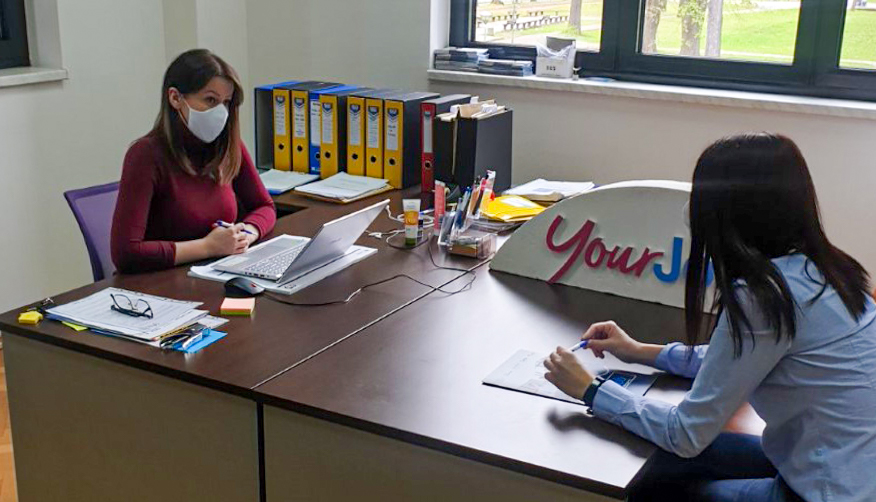
YourJob is a program of youth employment support, and it is being implemented in Bosnia and Herzegovina by Caritas Bosnia and Herzegovina with Diocesan Caritas of Banja Luka and Diocesan Caritas of Mostar - Duvno and Trebinje - Mrkan with the financial support of the Austrian Development Agency, Renovabis, Medicor Foundation and Caritas Austria. The project is offering support for job-seeking youth through counseling, access to professional orientation, first work experience, as well as start-up opportunities.
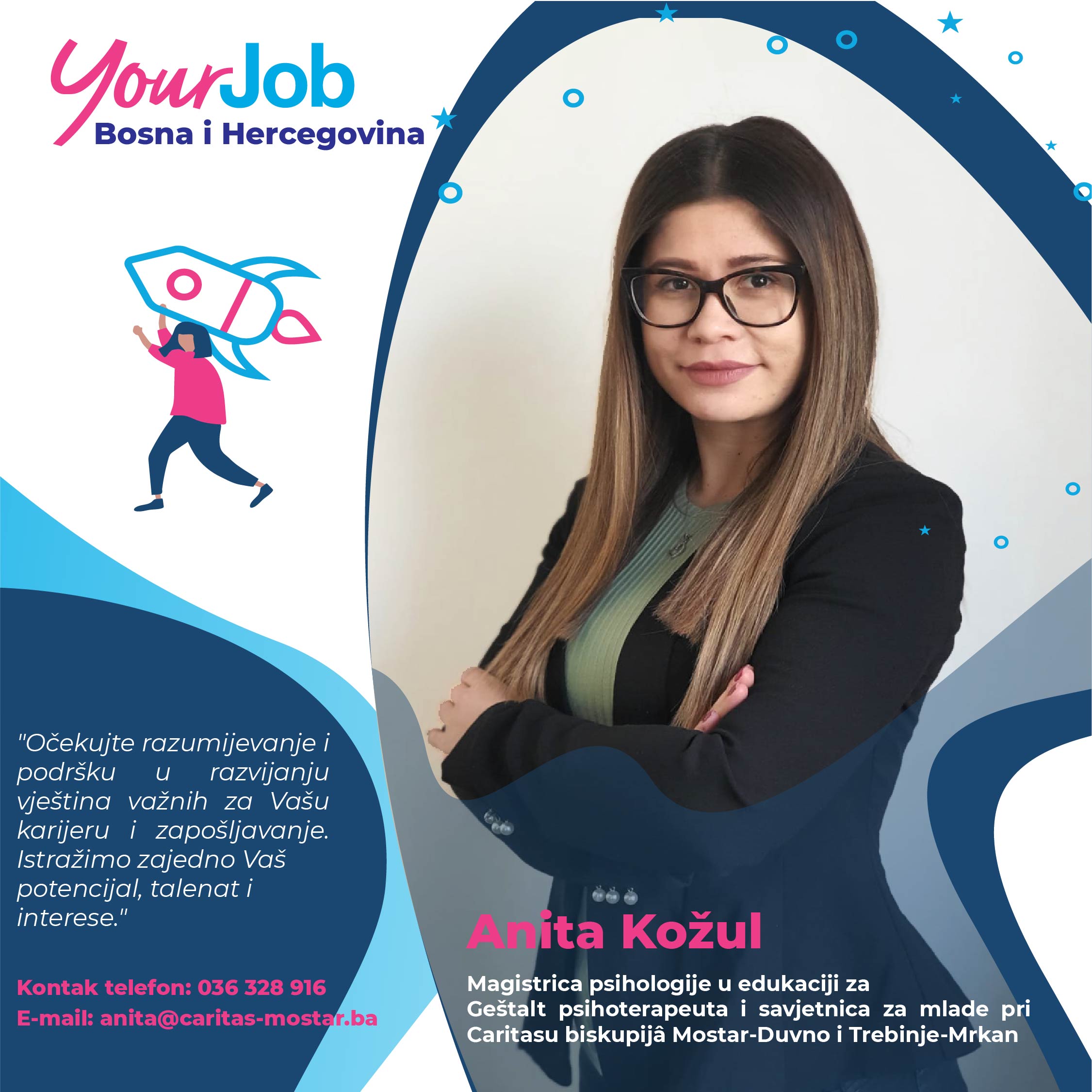
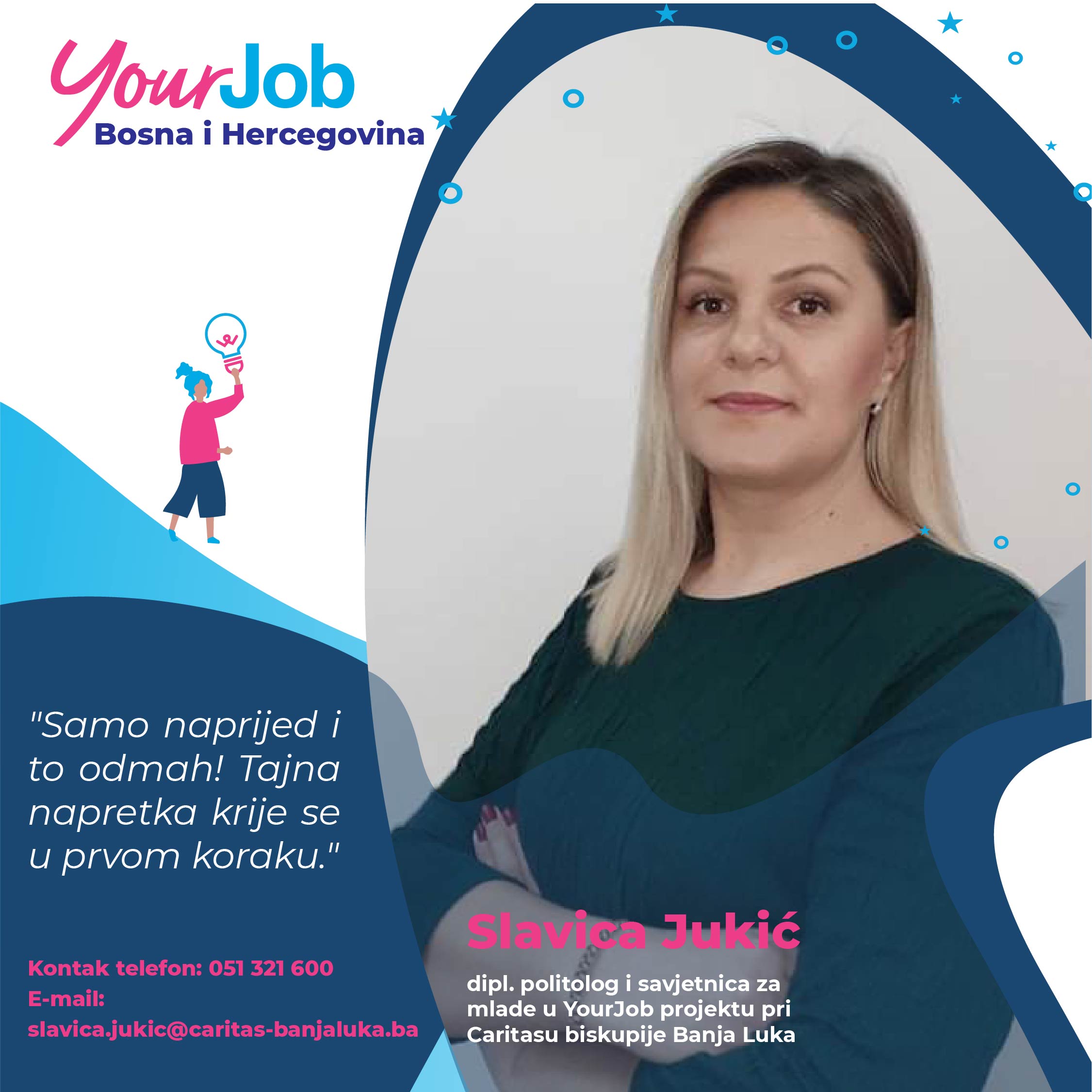
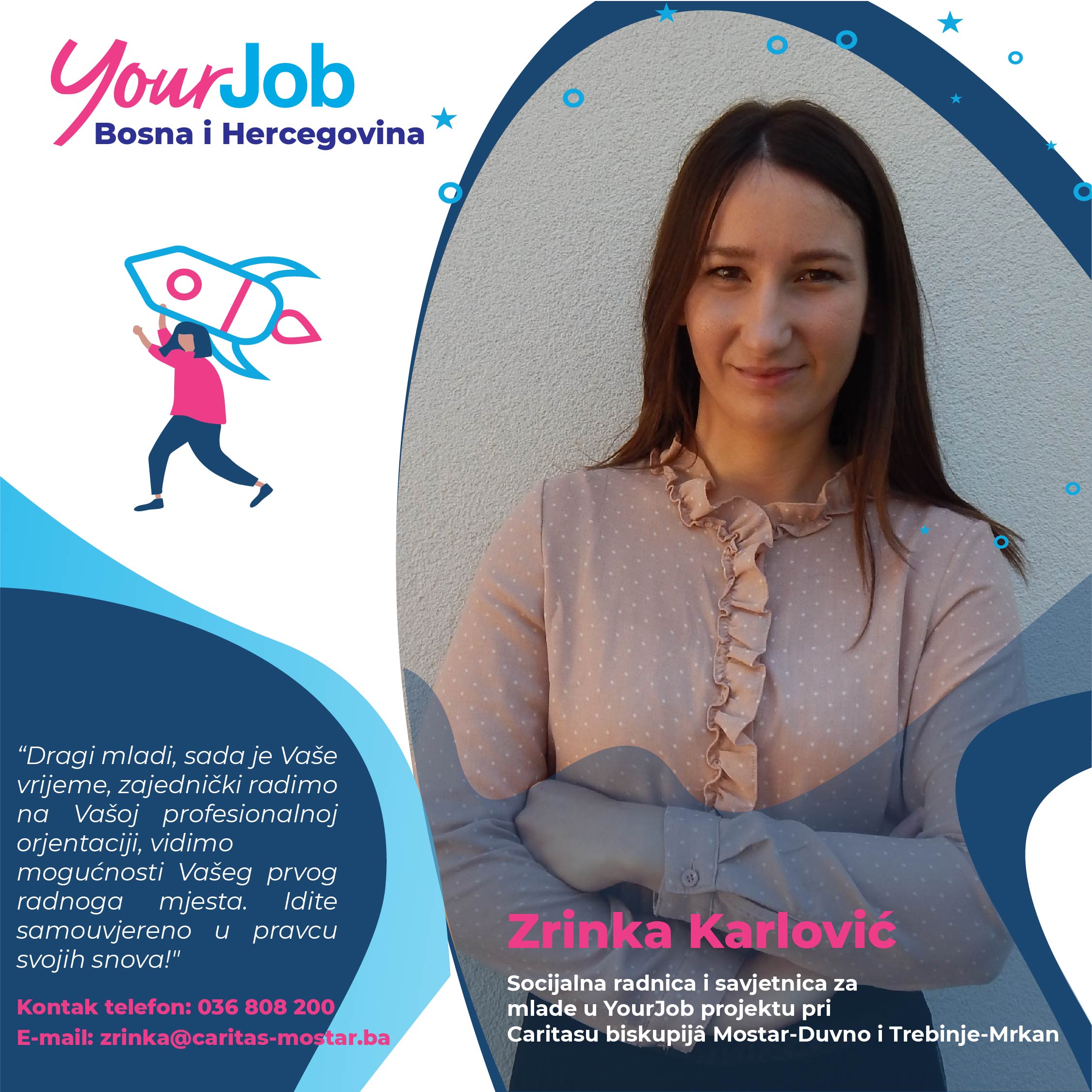
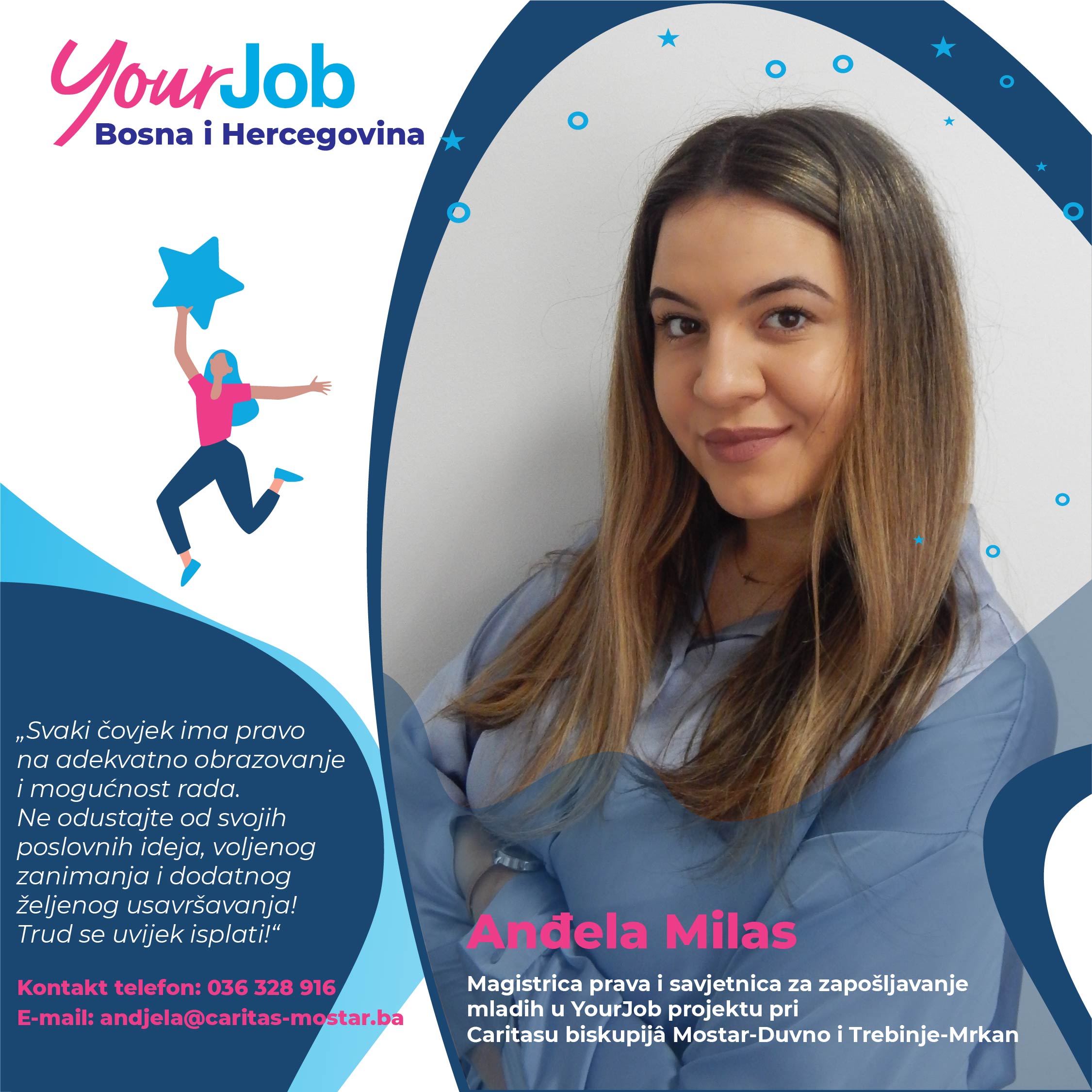
Counseling of young job seekers is one of the challenges posed to young people, but experienced and professional youth employment counselors within the YourJob project in BiH. Guidance counselors Slavica Jukić, Zrinka Karlović, Anita Kožul, Anđela Milas, and Tanja Valentić are the team of five youth guidance counselors who work in three counseling centers in Banja Luka, Čapljina, and Mostar. In communication with young people, they are adorned with expertise, knowledge and patience, and words of praise from young people as well as from project partners speak volumes about their approach and professionalism. They monitor young people in their job-seeking process and prepare each young person for their first interview, accompanying them during various training or internships, staying in touch even when the young people are employed. We can proudly say that the guidance counselors are the heart of the YourJob project, that with their dedicated work in the project, as well as in relations with young people, partners and employers they represent everything that YourJob project in Bosnia and Herzegovina is: a hope for a better future for young people.
Through the three YourJob Youth Employment Counseling Center, over a period of 2 years, more than 1,100 different life stories were told of young men and women who are looking for a job or want to improve further. On that occasion, we talked with our counselors on various topics, challenges and successes they achieve in the project.
How do young people, who come to counseling, see their perspective in the future?
There are different life stories and backgrounds of young people who come to counseling. What is most often noticed in conversations with young people is that they are insecure about their future and how to find employment, and especially financial stability. Through formal education (high school and college), they are not prepared for what follows. Entering the labor market and applying to the official employment service, young people are confused for several reasons: can they work with their degree; how to get a job, they are aware of the lack of practice and work experience as well they are discouraged from applying to the tenders. Their future is simply blurred.
The position of most young people is extremely unenviable, the best indicator of the situation are various surveys that indicate that from 60% to 70% of young people want to leave BiH. The current situation with the pandemic has further worsened the situation, so the perspective and expectations from the future are very low. Those who have been unemployed for many years are quite demoralized and apathetic, it often happens that during years of unsuccessful registration at the employment office, they lose their acquired skills, knowledge and self-confidence. As their chances for employment are reduced, they are usually in an unenviable economic and social situation.
The labor market is not harmonized, therefore rarely one finds a job in the profession for which they were educated. Therefore, young people see an opportunity in informal education and training, through which they can better respond to market needs. The vast majority do not see a perspective in Bosnia and Herzegovina at all, but on the other hand, they are aware that going to one of the EU countries is not easy at all, so they further invest in their knowledge in order to be more competitive on the market.
Most common problems, challenges and reflections of young people? How you guide them?
There are various profiles of young people visiting counseling, but most often come academically educated young people who have dedicated their previous years to learning and taking exams. After a short excitement over finished graduation, there is panic and nervousness about what to do next. The second group is young people who did not enroll in college after high school, but still have a problem finding a job. The most common problem is their disappointment in the system, and they believe that today no job can be obtained without "connections".
After conducting an informative conversation with a young person, we get to know their background, explore the wishes and work preferences, and together we agree on further steps. First, we work on the preparation of a CV and a cover letter (sometimes only an update is needed, and sometimes start from scratch), then the young person has the task of independently researching the market and employers with whom s/he would like to be employed. The next step is to send open job applications to employers and go for interviews. In this way, we encourage the young person to take concrete actions and thus take responsibility for the process. Of course, throughout this process counselors are available to support and motivate their active job search. We inform them about open job vacancies or put them in contact with employers with whom we have cooperation, and for which we know are willing to give a chance to young people.
In an internship-seeking process, many employers refuse the application, but I, as a counselor, try to encourage young people to continue. I have had experiences where young people give up after their first failure and no longer respond or return to counseling. I am glad when a young person knows what he wants and sees the way our project can help
A major problem of youth unemployment is the mismatch of their occupations and skills with the labor market. Also, frequent problems are modest subsidies for the employment of trainees, lack of incentives for youth employment in BiH, inability to finance retraining or professional rehabilitation, or continuing education, unavailability of facilities and support for business development.
You are young professionals, who advise other young people. Do you consider it as an advantage or a disadvantage in your work?
In most cases, being young is an advantage; we as young counselors have a "fresh" experience after completing formal education and entering the labor market. Young people find it easier to trust us and to open up. They are happy to hear advice from our own experiences, which is further confirmed by the information that we are employed in the project. Sometimes being young is a bigger challenge in communicating with employers and various stakeholders who are surprised at first, but that prejudice quickly dissipates when direct communication begins.
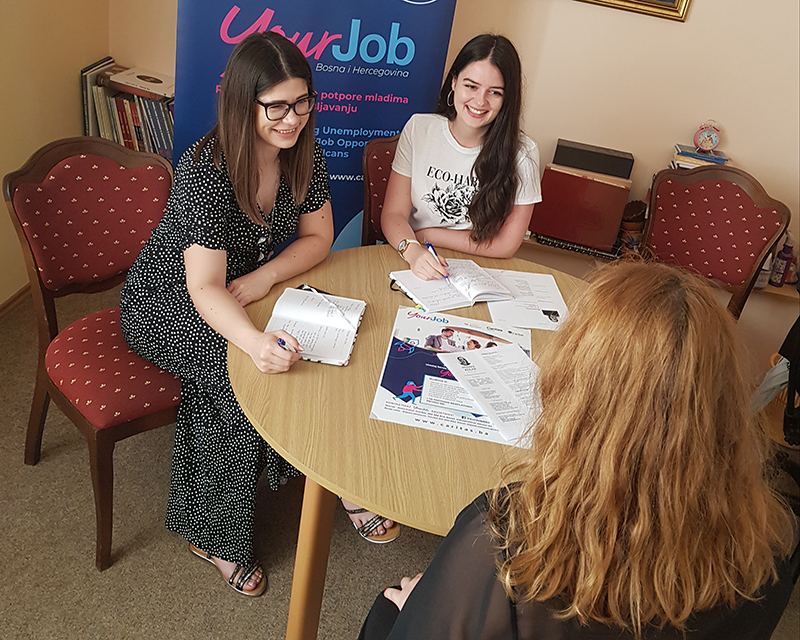
Counseling is a process of empowering young people who face various difficulties that they find difficult to cope with it on their own. A challenge for counselors is to assess how to gradually overcome the problem and achieve greater life satisfaction among young people. Furthermore, the young people who come are mostly in need and in a difficult financial situation, especially now at the time of the pandemic, when their parents lost their jobs and thus their incomes.
Young people often need someone to listen to them; especially being more open to someone, they see for the first time. Moreover, when we together find something that can fulfill them, training or anything else, I feel like I’ve done a good job.
Through two years of the YourJob project experience, for sure you have a lot of successful examples that have left a mark on your career. Can you point out some of them?
There are many successful examples because a large number of beneficiaries got a job after completing an internship or after some training.
One example is a girl from a rural area, whose parents are unemployed and in a difficult financial situation, and at the time of her first visit to counseling she had a tragedy in her family that she had a very hard time dealing with. It took time for her to accept the situation fully and to start thinking positively after several consultations. She started working in a coffee shop, but she didn’t feel good surrounded by the noise and many people. During the counseling, she told us that she loves nature, handcrafting wooden objects, especially the decoupage technique, so we offered her training for painters. After completing the training, she was offered to work permanently in the company where she did the practical part of the training, together with other colleagues from the training.
One of the most beautiful examples for me is certainly Monika who comes from a single family, has a younger brother, and the only income in the family is the pension her mother receives. Through individual work, we strengthened her communication skills together, relieving her of the fear of talking to employers, preparing her for an interview with the employer, as well as updating her CV. During that time, Monika actively sent job applications, open ones but also a response to active tenders, to various companies in the Mostar area. She participated in several job interviews, every day getting closer to achieving her goal and getting a job. After investing so much effort and not giving up, an opportunity opened up: one bookkeeping company, the first partner of our project, was looking for a new employee. We informed Monica of the opportunity. She sent an application and went for a job interview. Although she had no experience in the profession, during her interview she showed other skills and knowledge acquired in various student and seasonal jobs, and above all, she showed that she is not afraid of work and that she wants to learn and improve. Thanks to the possibility of co-financing employment, the company decided to provide an opportunity and hire Monica. Monika has been employed for two months now and is very satisfied with the opportunity to gain experience and even a long-term engagement with her current employer.
During my engagement in the project, we have many examples of positive practice, and one of them is enabling retraining for an economic technician, for two candidates who, due to their poor financial situation, thought they would have to drop out of school.
A successful example from the counseling practice is the situation in which one of our beneficiaries realized that her CV contained a few elementary mistakes and she did not know how to make it better. In addition to the fact that we, as counselors, gave her some guidelines and recommendations on how to complete it, the beneficiary also expressed a desire to participate in a workshop for writing a resume and cover letter. Shortly afterward, she informed us that she had received positive criticism and praise from a potential employer for the look and content of her resume, based on which they both invited her and included her in their database and informed that they would keep it in mind when they have next job opening.
At the end of this interview, we asked YourJob youth guidance counselors to send a message to young people.
Anita’s message: During your formal education, expand your network of acquaintances, volunteer, and get involved in associations/organizations for young people. Don’t wait for an opportunity, create it!
Slavica’s message: Don't give up on your dreams, no matter how unattainable they may seem. Invest as much as possible in yourself through education and non-formal education, in order to raise the level of self-confidence. Take advantage of all the opportunities that are provided to you, like these through the YourJob project.
Zrinka’s message: Dear young people, do not sit at home and say that there is no possibility for you in this country. Walk confidently in the direction of your dreams.
Tanja’s message: Get active and take advantage of the opportunities that come your way. Create them with our support and be ready to change your environment.
Anđela’s message: Although the process of finding a job is sometimes exhausting and arduous, patience, perseverance, and courage is what will set you apart from other candidates with potential employers.
Thank you to our interlocutors for the answers on our questions thus we tried to bring closer the youth counseling process. To all young people who have not yet done so, we recommend that you contact the counseling center and discuss your career with counselors. You can find contacts on the social networks Facebook and Instagram YourJobBiH.
Through two years of project activities of the YourJob project in Bosnia and Herzegovina, more than 1,100 young people from Mostar, Čapljina, and Banja Luka are involved. Over 110 professional training were organized for 500 young people, more than 30 soft skills trainings for 300 young people, while 130 young people gained their first work experience through an internship program. More than 60 young people found permanent employment through the YourJob project, while 50 young people stepped into the process of self-employment, four of whom received financial incentives for their company.
The Caritas regional three-year project YourJob aims to empower young people, by providing opportunities to increase their competitiveness in the labor market. It is implemented by the Caritas network in 14 cities/municipalities in Bosnia and Herzegovina, Albania, Kosovo, Serbia, led by Caritas Austria with financial support from the Austrian Development Agency, Renovabis, and the Medicor Foundation. More about the project on www.caritas.ba and Facebook and Instagram profile YourJobBiH.


Izdvojeno


